 By admin
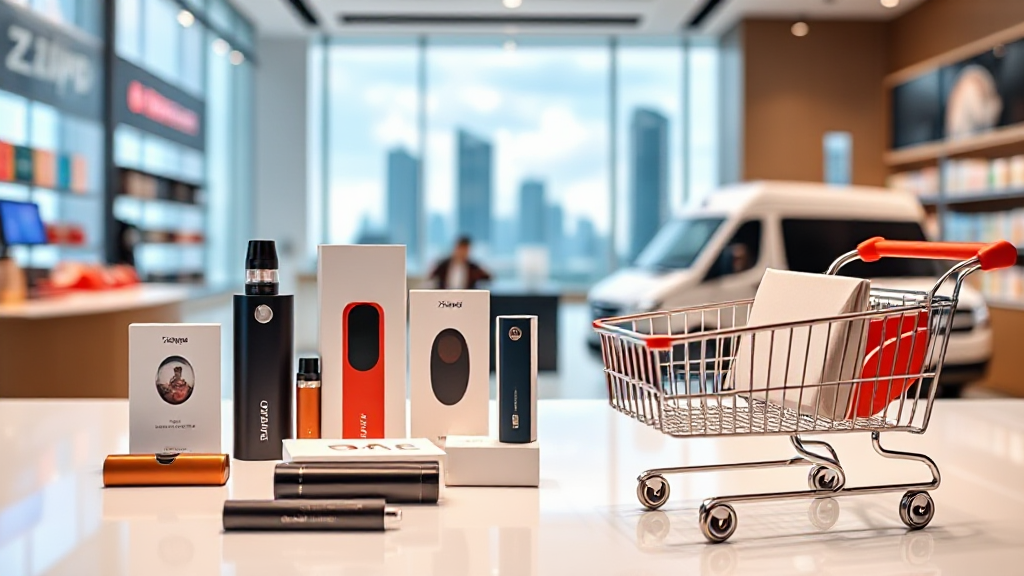
Building an Order Around a Lana Ultra 2: What Changes at Checkout
Most people do not buy a Lana Ultra 2 alone. In practice, it becomes one line item inside a basket you are still assembling, and that changes almost everything about how the order behaves at checkout. A single device is a quick decision. A basket is a small logistics project, and Singapore shoppers who think in full orders tend to get better value, faster delivery and fewer awkward moments at the door. This is a decision-tree walkthrough for the basket builder, using the marbo 25k as a reference point for how one high-capacity device sits alongside everything else you are considering.
The lana ultra 2 is the kind of product that rarely travels alone. It is a primary device, which means it usually anchors the order while smaller items fill the gaps around it. Once you accept that framing, the questions stop being about one product and start being about the shape of the basket: how many devices, what mix of flavours and formats, and whether the total weight and value push you into a different delivery or payment lane.
Scenario One: The Single-Item Order
You want one device, you order one device, and you are done. This is the simplest branch of the decision tree, and it is also the least efficient for most Singapore buyers. A single-item order still triggers the same delivery process, the same packaging, and the same cash-on-delivery handling as a larger basket, but you absorb all of that overhead for one product.
There is nothing wrong with this if you are restocking a single favourite or trying a format for the first time. Where it becomes a problem is when the single item is a high-capacity device and you already know you will want a backup or a second flavour within the week. The second order then arrives as a separate delivery, with its own timing and its own payment step, and you have effectively paid the convenience cost twice.
If you are genuinely testing, keep the single-item order small and treat it as a sample run. If you are restocking, jump straight to the mixed-basket branch below. The lana pix is a useful example of a device people often buy alone first, then regret not bundling once they realise how quickly a single unit disappears.
Scenario Two: The Mixed Basket
This is where most experienced shoppers actually live. A mixed basket means one primary device, one or two secondary devices, and a few small items that round out the order. The primary device anchors the basket, the secondaries cover different moods or formats, and the small items fill the gaps so the delivery feels worth it.
When you build this way, a few things change at checkout. First, the total value climbs, which often unlocks better delivery terms or at least makes the delivery fee feel proportionate. Second, the packaging gets more substantial, which matters if you care about discreet arrival. Third, and most importantly, your payment decision shifts: a larger basket makes cash on delivery more attractive because you are committing more money, and paying at the door gives you a final checkpoint before the handover.
A practical mixed basket might pair the Lana Ultra 2 with a lana pen plus 9k as a lighter daily carry, plus a lana pix 20k for variety. That combination covers a primary device, a compact backup, and a different capacity tier, which is exactly the kind of spread that makes one delivery feel complete rather than partial.
There is also a flavour dimension. Buying two or three devices in the same family lets you split flavours across the week without committing to a full bulk order. The basket stays flexible, the delivery stays single, and the checkout stays simple. This is the sweet spot for most Singapore buyers who order regularly but not in industrial quantities.
Scenario Three: The Bulk Order
Bulk orders are a different animal. Here the question is not whether to bundle but how far to push it. A bulk basket usually means multiple primary devices, several secondaries, and sometimes a mix of brands to cover different preferences across a household or a group of friends.
At this scale, delivery and payment become the dominant concerns. Delivery timing matters more because a large order is harder to hide and harder to reschedule. Payment matters more because the total is larger and cash on delivery gives you a way to verify the handover before money changes hands. Discreet packaging also stops being a nice-to-have and becomes a genuine requirement.
Bulk baskets often include a snowwolf 16k or a marbo vape 25k as anchor devices, with smaller units filling the rest of the order. The logic is the same as the mixed basket, just scaled up: one delivery, one payment step, one point of contact. The trade-off is that a bulk order is less flexible if you change your mind, so it rewards buyers who already know what they want.
If you are ordering for more than one person, bulk is almost always the right branch. If you are ordering for yourself and simply stocking up, a large mixed basket usually beats a true bulk order because it stays easier to adjust on the next cycle.
What Actually Changes at Checkout
Once the basket is built, the checkout experience shifts in three concrete ways. The first is delivery scheduling. A larger basket gives you more reason to care about the delivery window, and in Singapore that usually means choosing a slot when someone is actually home. A single item can sit with a neighbour; a full order usually should not.
The second is payment method. Cash on delivery becomes more attractive as the basket grows, because it moves the risk of a wrong or damaged item to the moment of handover. For buyers who already use terea singapore style products alongside disposables, this is a familiar pattern: pay at the door, check the package, then commit.
The third is packaging and discretion. A larger basket needs sturdier packaging, and that packaging is more visible in transit. Discreet outer packaging matters here, not because the contents are unusual, but because a bigger box draws more attention than a padded envelope. If discretion is a priority, keep the basket reasonable rather than maximal.
There is also a subtler change: your own decision quality. A single-item order is easy to make impulsively. A basket forces you to think about balance, capacity and timing, and that usually produces a better order. The basket builder rarely regrets a well-shaped order; the impulse buyer often does.
One more practical note: keep the basket within a size you can actually verify on arrival. A very large order is harder to check item by item at the door, especially if you are paying cash. A basket of three to six items is usually the sweet spot between efficiency and verification.
Frequently Asked Questions
Is it better to buy one device or build a basket?
For most regular buyers in Singapore, a small mixed basket is better than a single-item order because it spreads the delivery and payment overhead across more value. A single-item order only makes sense if you are genuinely testing a format for the first time.
Does a larger basket change how cash on delivery works?
It does not change the mechanism, but it changes the stakes. A larger total makes cash on delivery more useful because you can verify the package before paying. Keep the order to a size you can check at the door.
How many devices should a mixed basket contain?
Three to six items is a practical range. That is enough to justify the delivery, cover a primary device plus backups, and still stay verifiable at handover. Beyond that, you are moving into bulk-order territory with its own trade-offs.
Should bulk orders use the same payment method as small ones?
Not necessarily. Bulk orders benefit more from cash on delivery because the total is higher and the verification step matters more. Smaller orders can use whichever method is most convenient.
Building an order around a Lana Ultra 2 is really about deciding which branch of the decision tree you are on. Single-item orders are fine for testing, mixed baskets are the everyday default, and bulk orders reward buyers who already know their preferences. Once you pick the branch, the checkout changes follow naturally: delivery timing, payment method and packaging all adjust to the shape of the basket you built.